
Call us anytime
+86 15667696697

Optical instruments and high-end vision products impose extremely strict requirements on raw materials: zero dimensional deviation, extremely low thermal expansion coefficient, non-magnetic interference, delicate surface texture, corrosion resistance, no deformation, and excellent precision machinability. Ordinary metal materials can hardly meet multiple high-precision standards at the same time. With its unique physical and chemical properties, titanium and titanium alloys perfectly fit the precision manufacturing needs of the optical and vision industry.
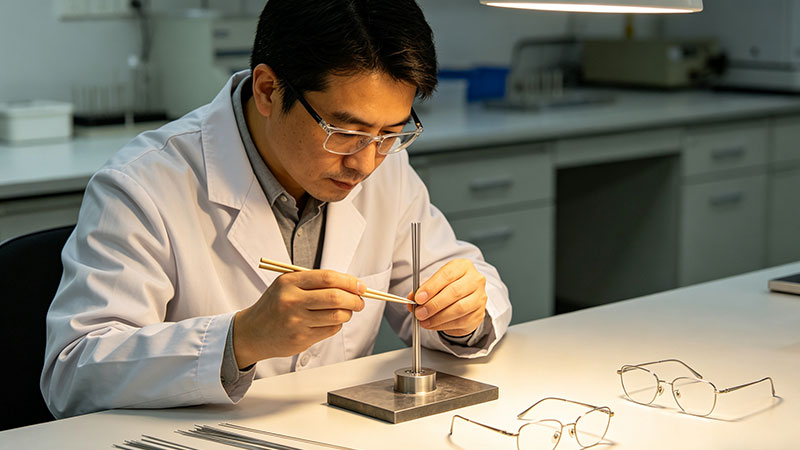
Titanium features a low linear expansion coefficient, resisting deformation under temperature changes, and stably guarantees the dimensional accuracy of optical lenses, optical path structures, and precision frames. It is inherently non-magnetic, causing no signal interference to optical sensors, precision optical paths, or imaging systems. Meanwhile, it is resistant to sweat corrosion, oxidation resistant, non-fading, and highly malleable for surface treatments such as matte, polishing, and sandblasting for high-end textures.
Main application categories include pure titanium eyeglass frames, titanium alloy structural parts for optical instruments, precision optical path fixing components, accessories for vision testing equipment, housings for high-end eye care instruments, and internal precision components. The products feature high accuracy, strong stability, light and comfortable wearing, and resistance to deformation and aging after years of use. They satisfy both civilian high-end vision wearing demands and the high-standard material selection requirements of industrial precision optical equipment and professional testing instruments, making them the core preferred material for high-end manufacturing in the optical and vision field.