
Call us anytime
+86 15667696697
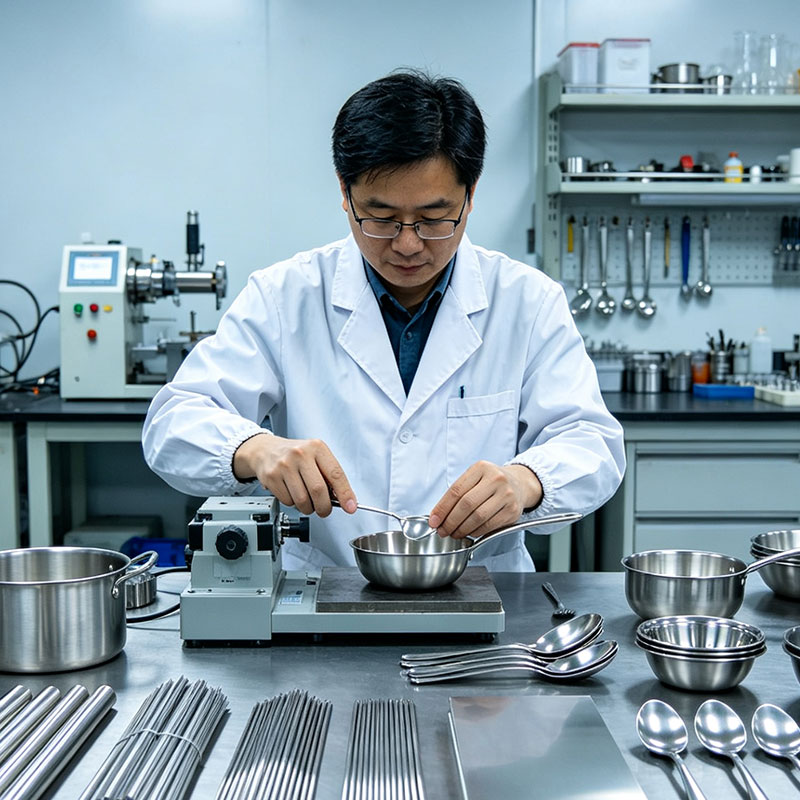
Titanium and titanium alloys – especially pure titanium cookware materials – are increasingly critical in the cookware industry, which demands high food contact safety, lightweight design, and durability. These advanced materials combine titanium’s bio-inertness, corrosion resistance, and excellent thermal conductivity, providing safe and efficient solutions for kitchen scenarios.
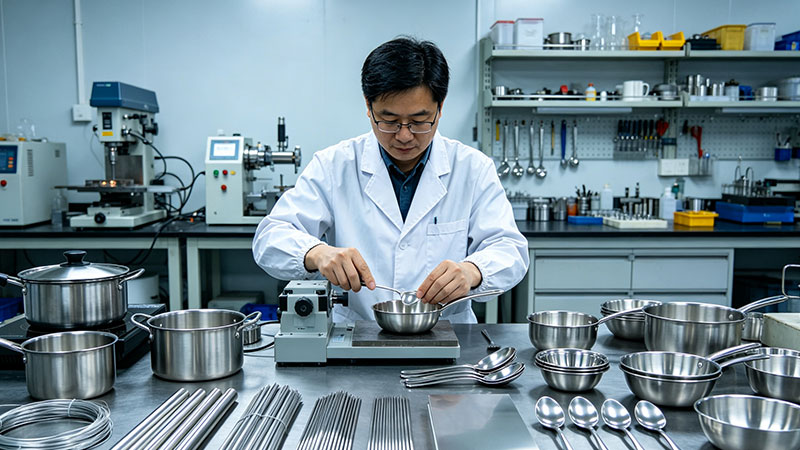
☆ Why Titanium Cookware Is Gaining Popularity:
1. Health and Safety Assurance
Pure titanium boasts excellent chemical stability and releases no harmful substances. Cookware made of titanium allows direct food contact without concerns about heavy metal migration, significantly improving cooking safety.
2. Enhanced Corrosion Resistance and Durability
In environments with acidic and alkaline food materials, high-temperature cooking, and repeated cleaning, titanium cookware maintains the same stable oxide film performance as pure titanium, ensuring no rust or discoloration during long-term use.
3. Balance Between Lightweight and Thermal Conductivity
When formed into thin-walled cookware, titanium delivers excellent uniform thermal conductivity and lightweight properties, ideal for woks, soup pots, frying pans, and various other cooking scenarios.
4. Wide Applications of Titanium Cookware:
- Household woks and soup pots
- Portable outdoor cookware
- Children’s tableware and baby food pots
- Professional baking trays and pans
- Hot pot and steamer components

Typical Kitchen Applications:
- Pure titanium cookware: Widely used in household kitchens and outdoor scenarios, healthy, durable, and easy to clean.
- Titanium alloy tableware: Ideal for lightweight outdoor equipment, corrosion resistant and extremely light.
- Titanium composite cookware: Used in high-end cooking equipment requiring high-efficiency heat conduction, such as multi-layer composite woks.